

Välkommen

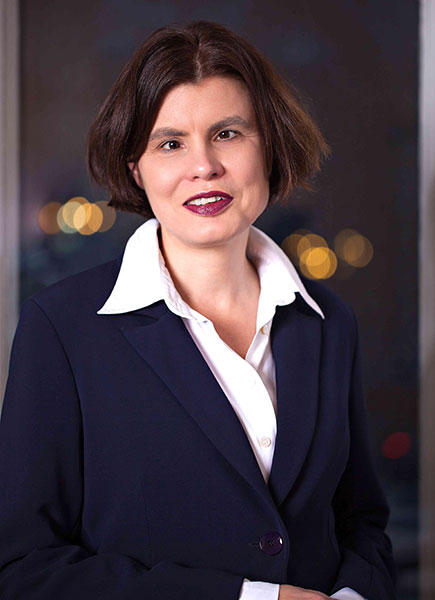
Hjärtligt välkommen till advokatbyrån tillhörande advokat Svenja Schmidt-Bandelow. Som har funnits i Berlin sedan 1996.
Genom min kvalifikation som fackadvokat för familjerätt, fackadvokat för migrationsrätt och även omfångsrika erfarenheter inom området familjerätt, internationell familjerätt, internationell privaträtt samt Europarätt erhåller du ett kompetent stöd i alla de här rättsliga frågorna. Jag kan representera dig vid alla Amts-, Land- och Oberlandesgerichte (domstolar) i Tyskland samt vid Kammergericht Berlin (domstol). Jag erbjuder även rådgivning på engelska, franska, italienska och svenska.
Mitt mål är först och främst att hitta en lösning utanför domstol. Om detta inte leder till en överenskommelse eller en förlikning kan jag företräda dig vid den behöriga domstolen – även utanför Berlin. I skilsmässo- och adoptionsärenden som rör tyskar som bor utomlands företräder jag dig gärna inför Schönebergs lokala domstol i Berlin, som har exklusiv behörighet.

Konsultationer, medling och korrespondens på engelska, franska, italienska och svenska är en självklarhet för mig. Det europeiska samarbetet med kollegor stöder mitt arbete i gränsöverskridande familjerättsliga frågor.

Du är välkommen att kontakta mig till exempel med följande frågor:

Tysk och internationell familjerätt

  • Skilsmässaiallmänhet och i synnerhet i ett internationellt sammanhang (t.ex. binationella äktenskap, skilsmässa och för tyskar som bor utomlands).
  • Äktenskapsavtal,lagval, äktenskapsrätt, underhållsrätt, särskilt i internationella sammanhang.
  • vårdnadoch umgängesrätt
  • Bortförandeavbarnmed hänvisning till Haagkonventionen om de civila aspekterna på internationella bortföranden av barn
  • Redovisning av en utländsk adoption

Migrationslagstiftning

  • Uppehållstillstånd (familjeåterförening, särskilt arbetstillstånd, bosättningstillstånd).
  • UppehållskortförEU- medborgares familjemedlemmar
  • Naturalisering
  • Medborgarkort
  • Återinförandet av tyska judar och deras ättlingar samt judar som bodde i Tyskland under nazitiden.

Tveka inte att kontakta mig i andra familje- och migrationsrättsliga frågor.

Öppettider:

Månd – fred kl: 9 – 18 h och efter överenskommelse

Advokat

KARRIÄR

  • Studerade juridik vid Freie Universität Berlin med inriktning på internationell privat och komparativ rätt.
  • Juridisk tjänstgöring i Berlin med placering vid Europaparlamentets rättstjänst i Luxemburg.
  • 1996 Andra delstatliga juristexamen och antagning till advokatsamfundet vid Berlins regionaldomstol.
  • Självständig advokat sedan 1996
  • 2004 Godkänd som specialistjurist i familjerätt
  • 2014 Slutförande av fortbildning till medlare
  • 2019 Godkänd som specialistjurist i migrationsrätt

Medlemskap

För att hålla mig uppdaterad om den internationella rättsliga utvecklingen är jag medlem i olika europeiska sammanslutningar och arbetsgrupper:

  • Tysk-franska advokatsamfundet (DFJ)
  • Tysk-italienska advokatsamfundet (DIV)
  • Tysk-nordiska advokatsamfundet (DNJY)
  • Föreningen för binationella familjer och partnerskap (iaf)
  • Arbetsgrupper för familje- och utlänningsrätt inom det tyska advokatsamfundet
  • MIKK e.V. (Medling i internationella barnkonflikter)
  • Amnesty International

Föreläsare, konsult och författare inom fortbildning

Jag förmedlar också min expertis som konsult, föreläsare och författare:

  • Sedan 2007 konsult och föreläsare för föreningen för binationella familjer och partnerskap (iaf).
  • 2012 – 2014 Föreläsare på ARBER Seminare GmbH:s kurser i internationell familjerätt för specialiserade jurister.
  • Medförfattare till handboken om invandringsrätt och internationell familjerätt „Binationaler Alltag in Deutschland“, som publicerats av föreningen för binationella familjer och partnerskap (Verlag Brandes & Apsel, 2012).
  • Medförfattare till boken „Paarbeziehungen, Bikulturalität, Globalisierung“, utgiven av Association of Binational Families and Partnerships (Lit-Verlag).

Regelbunden fortbildning i familje- och migrationsrätt samt i medling, bland annat vid internationella konferenser, är också mycket viktigt för mig för att kunna ge mina klienter aktuell specialistkunskap.

Språkkunskaper

Jag har mycket goda språkkunskaper i engelska, franska och italienska och medelbra språkkunskaper i svenska.
Möten med klienter och medlare kan enkelt genomföras på engelska, franska eller italienska.

God kommunikation är möjlig även på svenska.

Law Office

OFFICE COMUNITY & MY COWORKER

I am in an office partnership with the following colleagues: Viktoria Lokau, lawyer and notary, Ulrike Klein, lawyer, Elmar Hörnig, lawyer, and Susan Zaharii, lawyer.

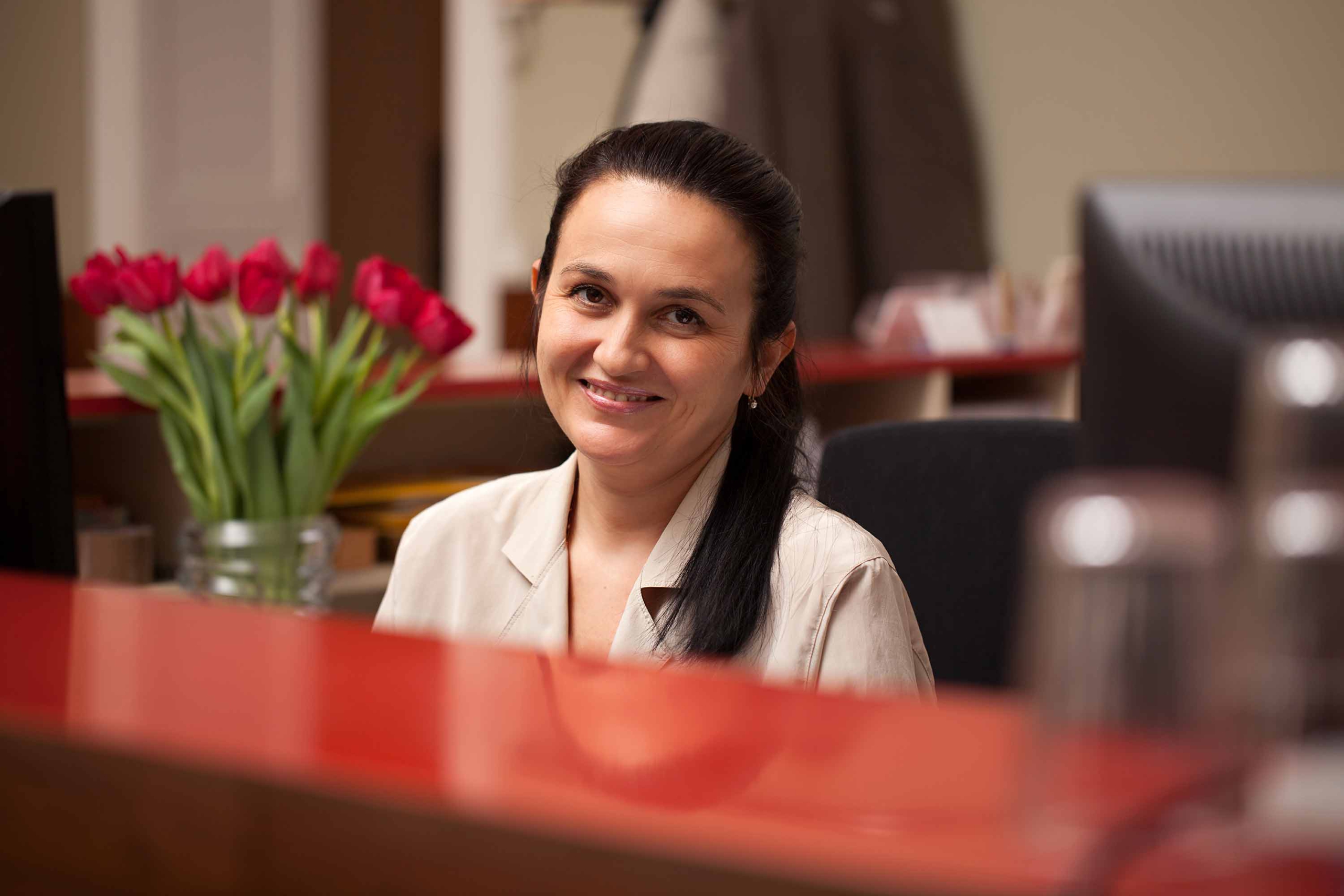
My coworker Elena Kindel.

HOW TO GET HERE

Our office is located at Hardenbergstraße 19 in City West in the Charlottenburg district, directly next to the Chamber of Industry and Commerce (Hardenbergstraße / corner of Fasanenstraße) and the C/O Berlin Foundation. Our office is easily accessible by underground and S- Bahn. Get off at Zoologischer Garten station. From there it is only a few minutes‘ walk: Leave the station on Hardenbergstraße in the direction of Ernst-Reuter-Platz. (the Gedächtniskirche is in the opposite direction).

Coming from the station, you will find the office on the left-hand side directly next to C/O Berlin Foundation. You can reach Zoologischer Garten station by the means of transport listed below:

Bus

M46, 100, 109, 110, 145, 149, 200, 204, 245, 249, X9, X10, X34

S-Bahn
urban railway

S5, S7, S9, S75

U-Bahn
subway

U2, U9, U12

Regionalbahn
regional railways

RE1, RE2, RE3, RE4, RE5, IR14

Immigration Law

The Residence Act

The German immigration law is regularised by the Residence Act, in force since January 1, 2005.

Two types of residence permit

In Germany, there are two kinds of residence permit: a limited and an unlimited one.

In order to achieve the unlimited residence permit, sufficient language skills are required and knowledge of the legal and social system has to be substantiated. As a rule, attending the so-called integration courses can fulfil this requirement, unless the applicant disposes of an adequate school education. In principle, all new immigrants in Germany should participate in these integration courses.

Moreover, a basis for the pension plan has to be created. As regards the time schedule, you have to be in possession of a residence permit within five years, unless you cohabit with a German spouse or child within a domestic community. In this case, three years are sufficient.

Visa issues

Foreigners who do not live in the Federal Republic of Germany yet but wish to travel to Germany, have to apply for a visa at the German Embassy in their home country. A visa can be granted for the purpose of taking up employment or studies, for family reunion or for tourism purposes.

Persons desiring a visa for family reunion or marriage have to submit proof of the acquisition of German language skills at level A1 (basic knowledge). The German Embassy is not obliged to justify the denial of a visa. If a visa request is denied without giving reasons, objection can be made by means of the opposition procedure (Remonstratonssverfahren).

If another remonstration notification is sent out, it is possible to institute proceedings before the Administrative Court of Berlin within one month after the denial has been notified.

Residence and work permits

The residence permit is bound to a specific purpose of residence and is granted together with the work permit, if the employed activity is permitted by the legal regulations.

Autonomous residence permit

Foreign spouses can get a residence permit of their own, independently from their German spouse, at the end of a three-year period.

In this regard, a legal consultation is advisable, as people seeking counselling tend to be unsure about this point.

EU-citizens

EU-citizens have a right to move freely for work purposes, i.e., they do not need a work permit.

For Bulgaria and Romania the free movement of workers is limited until January 1, 2014. For Croatia, this restriction remains in force until 30 June 2015. For EU-citizens, it is also possible to take up a self-employed activity in another EU-country, to exercise it and to set up a company. This so-called freedom of establishment is not subject to any limitations, it is granted to all EU-citizens.

Moreover, to all EU-citizens – also those of new member states like Bulgaria and Romania – the general right of free movement of persons applies, i.e., they may remain in another member state without the obligation to exercise a remunerative activity.

However, the EU-citizen has to finance his stay from his own resources and must have sufficient health insurance cover. You do not need a freedom of movement certificate any more in order to prove your right of free movement.

Naturalisation

The naturalisation is another important issue in immigration law. What are the requirements, under which a foreigner can be naturalised in Germany? After a period of eight years of permanent residence in the Federal Republic of Germany, there is a right to be naturalised, in exceptional cases already after seven years. In the case of marital cohabitation with a German citizen, naturalisation can be applied for already after three years.

In principle, when applying for the German citizenship, the original citizenship has to be given up. According to the law, dual nationality or a naturalisation with multiple nation-alities are accepted only in exceptional cases.

The obligation to give up their original citizenship does not apply to citizens of EU member states and those of Switzerland. Also, a dual nationality is always irrelevant when the citizenship is acquired through birth. For example, a child can easily acquire the German nationality through the mother and the Canadian one through the father.

Issuance of a certificate of citizenship

This can become necessary if you are in possession of the German nationality since birth but have never been in possession of a German passport. Before a German identity card is issued, the presentation of a certificate of citizenship is often required.

The purpose of such a certificate is to demonstrate that you possess the German nationality. The competent authority is the Federal Administration Office (Bundesverwaltungsamt) in Cologne. www.bva.bund.de

Further information

Information on these topics can be found on the info-page:

The Schengen Agreement
Freedom of Movement in the EU
The EU Blue Card
Self-Employed non-EU citizen
Marriage in Denmark

TO INFO-PAGE IMMIGRATION LAW

***

Further information

Selection of lectures on immigration law

PDF-File about the topic:
Familiennachzug im nationalen und europäischen Kontext unter Berücksichtigung der im Jahre 2015 und 2016 erfolgten Gesetzesänderungen im Aufenthaltsgesetz (17.06.2016)
*
PDF-File about the topic:
Besonderheiten des Eheschließungsverfahrens im In- und Ausland für binationale Paare (18.03.2011)

Important links concerning immigration law:

www.berlin.de/labo/
Here the address and itinerary to the aliens registration authority of Berlin can be found. Moreover, information on opening hours and the possibility to arrange an appointment online is provided.

www.berlin.de/sen/ias/index.html
On the homepage of the State Commissioner for Integration and Migration of the Berlin Senate, constantly updated information is provided.

www.bundesregierung.de/Webs/Breg/DE/Bundesregierung/BeauftragtefuerIntegration/beauftragte-fuer-integration.html
The Federal State Commissioner for Integration and Migration provides information on her office and work. An encyclopaedia where terms referring to immigration law like deportation and rejection are explained can also be found there.

www.bmi.bund.de
On the website of the Federal Ministry of the Interior, comprehensive information on many issues concerning immigration law can be found in the section “Themen A-Z” under the keyword “Ausländer, Flüchtlinge und Asyl“ (foreigners, refugees and asylum matters).

www.auswaertiges-amt.de
Numerous forms, lists of embassies and country information can be downloaded. Information on the requirements for the legalisation of civil status certificates is provided.

www.bamf.de
On the homepage of the Federal Agency for Migration and Refugees (Bundesamt für Migration und Flüchtlinge – formerly Bundesamt für die Anerkennung ausländischer Flüchtlinge) you can find background information on the topics of integration, migration, language acquisition and the right of asylum.

www.asyl.net
Provides information relating to the situation on asylum law in approximately 100 countries as well as a large collection of links and judicial decisions.

www.amnesty.de
Among others provides access to the annual reports of Amnesty International including background information on countries.

Family law

Important issues in family law include the law on marriage, separation and divorce, maintenance or support for the children and spouse, the law governing property issues and marriage, the relationship between legitimate or illegitimate children and their parents, such as paternity issues, parental responsibility or custody and rights of access between parents and children.

Marriage and marriage contracts

It is possible for partners to conclude a marriage contract at the time they get married thereby modifying the statutory regulations which provide for property acquired during the marriage to be owned jointly and introducing separation of property.

Otherwise each partner has the right to reapportionment of the assets acquired during the marriage which can be claimed in the event of a divorce. A marriage contract can also be used to agree to forego post-divorce maintenance as well as to rule out any reallocation of pension benefits.

Bi-national couples

Couples with different nationalities frequently require advice even before getting married with regard to the papers necessary for a marriage in the Federal Republic of Germany and in particular in connection with obtaining a marriage eligibility certificate for the foreign partner.


Divorce

Divorce is still the most important part of family law. In divorce proceedings, at least the partner who makes the divorce application has to be represented by a lawyer.

If the other partner agrees to the divorce, then they do not themselves have to be represented by a lawyer. In principle, a divorce presupposes a one-year separation.

In the context of divorce proceedings the court will consider the pension benefits the partners have acquired (reallocation of pension benefits), this ensures that a spouse who has not been in paid employment will still have some security in the form of future pension rights.

Divorce, parental responsibility, custody and access rights

In the event of a divorce, a settlement has to be reached concerning the questions of how parental responsibility, rights of access and contact with the children will be exercised.

Thus if one of the parents objects to joint responsibility it may be necessary to regulate parental responsibility and custody.

Separation and divorce agreements

Separation or divorce agreements may become necessary if assets acquired during a marriage have to be apportioned, or if post-marital maintenance or child support has to be decided.

Maintenance and support

During the separation period the partner who is earning less has a right to maintenance.

This is set at 3/7 of the income difference. Child support can be claimed for any children the couple may have, the amount being determined by the rates given by the so-called Düsseldorf-Index – or in the former East Germany by the Berlin-Index.

The amount payable in maintenance and support depends both on the ability of the person obliged to pay and on the needs of the recipients.

Divorce and property issues

In the event of a divorce it may prove necessary to decide what will happen to any property or assets the couple own.

For this one should seek detailed legal counselling and advice concerning the facts of the case.

Matters which may require consideration include the division of household belongings, the use of the family home and how to deal with jointly owned houses or apartments. It may also be necessary to reapportion assets acquired during the course of the marriage.

Divorce and bi-national couples

If a bi-national marriage ends in divorce, problems often arise with regard to the law which must be applied.

My experience in the field of international private law can help clear up which law is relevant to the divorce and whether the divorce can take place in Germany. For instance, the jurisdiction of German family courts is given if one of the partners is normally resident in Germany.

The German courts also have international jurisdiction even in the absence of such a residence if one of the partners is German or a German living abroad.

My knowledge of the law affecting foreigners allows me to brief clients on the effects a divorce would have on the residence status of the foreign partner.

International Family Law

International Family Law

Find these themes on information page:

***

International Conventions:
• Recognition of decisions concerning custody of children within the European Union as well as protection from child abduction
• Hague Convention on the Civil Aspects of International Child Abduction

***

Marriage in Denmark
• Marriage in Denmark – Overview

***

TO INFORMATION PAGE

Mediation